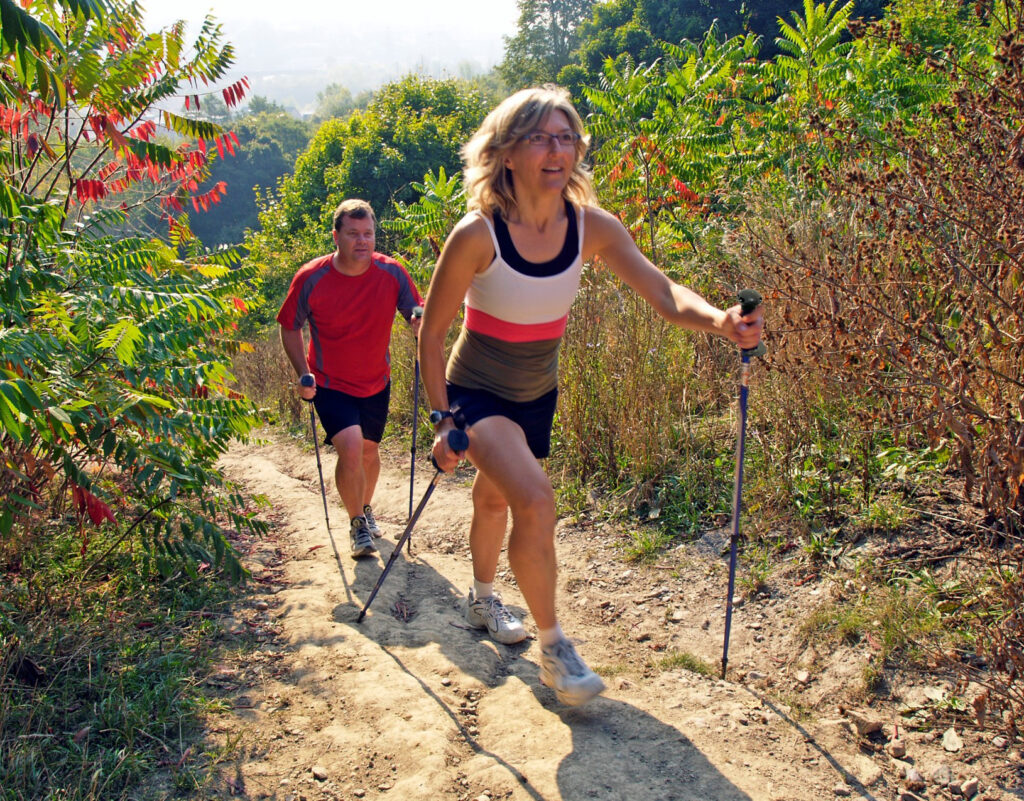
Living with kidney disease can affect more than lab results or clinic visits. Many people also deal with tiredness, pain, poor sleep, low confidence, and the feeling that kidney disease shapes their everyday life. A study published in the Journal of Renal Nutrition looked at whether a supervised Nordic walking program could help.
What the study looked at
Researchers studied 30 people with kidney disease over three months. Half took part in a supervised group Nordic walking program twice a week, while the other half continued their usual activities. The walking group used Activator® poles, which are designed to support walking and involve the upper body.
What changed for participants?
People in the Nordic walking group reported that kidney disease had less impact on their daily lives. Their quality-of-life scores improved in the area measuring the effects of kidney disease, and this improvement was meaningful in the study results.
Participants also described practical changes that matter in everyday life. Some reported less pain, more energy, better sleep, improved mood, and greater confidence. For many, the group setting made walking feel more enjoyable and easier to keep doing.
Why the group setting mattered
Exercise can be hard to start and even harder to continue, especially when someone is living with a chronic condition. In this study, walking with others, receiving support, and having supervision appeared to help participants stay motivated.
The findings suggest that a supportive walking program may help people feel more connected, more capable, and more confident in their ability to be active.
Takeaway for patients
Nordic walking with Activator® poles may be a safe and enjoyable way for people with kidney disease to feel better in daily life. The biggest benefits may come not only from the walking itself, but also from the encouragement, routine, and social support of a group program.
Before starting: If you have kidney disease or other health concerns, talk with your healthcare team before beginning a new exercise program.
Study reference: Chao, Neufeld, Ngo, Renouf, Squire, Hoens, and Desai (2020), Journal of Renal Nutrition.