In long-term care, a walk can mean so much more than simply getting from one place to another. It can help residents hold on to their independence, enjoy time with others and take part in the routines that make each day feel familiar. Activator® poles can make walking feel steadier and more engaging by bringing the upper body into the movement and offering two extra points of support.
Making Every Walk a Whole-Body Activity
Activator® poles do more than support the legs. As residents gently press through the handles, they also use their arms, shoulders and upper back. This may help build upper-body strength and encourage a more upright, purposeful stride. For someone who spends much of the day sitting, even a short walk can become a valuable opportunity to move more of the body.
Helping Residents Feel Steadier
Two poles give residents two additional points of contact with the ground. When the poles are fitted properly and the technique is taught well, they may help a resident feel steadier and more comfortable shifting their weight. That added confidence can make it easier to keep moving regularly. No walking aid can prevent every fall, but supervised pole walking may be a helpful part of a wider fall-prevention plan.
Encouraging Results from Geriatric Rehabilitation
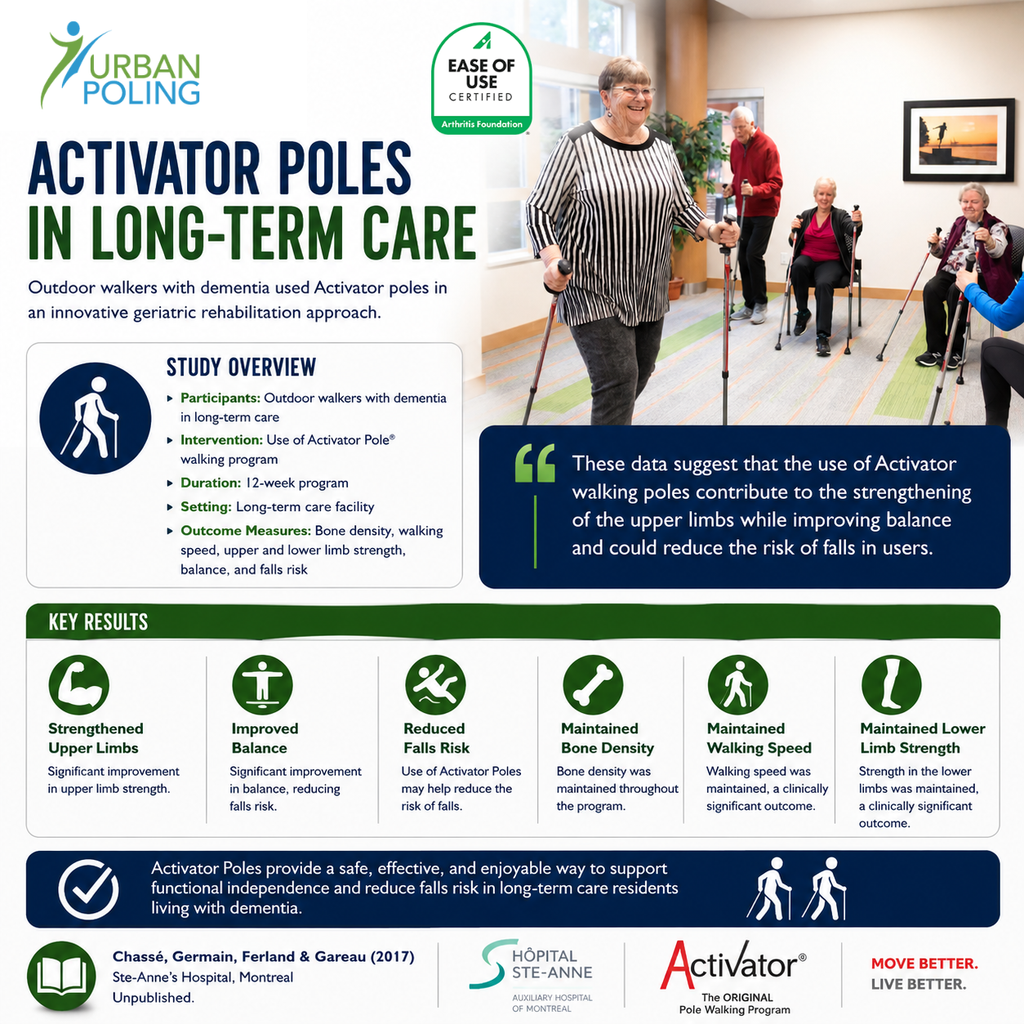
A geriatric rehabilitation program at Ste-Anne’s Hospital in Montreal looked at outdoor walkers with dementia who used Activator poles. The reported results included:
- Bone density was maintained—an especially important finding because preserving bone strength may help protect skeletal health and reduce the potential consequences of falls and fractures in older adults.
- Upper-limb strength improved, which may support everyday tasks such as pushing up from a chair, using mobility aids and maintaining greater independence.
- Balance improved, which is meaningful because better postural control may help residents feel steadier, move with greater confidence and lower their risk of falls.
- Walking speed was maintained, suggesting that participants preserved an important measure of functional mobility that can affect their ability to keep pace with daily routines and activities.
- Lower-body strength was maintained, helping preserve the capacity needed for standing, transferring and walking as independently and safely as possible.
Source: Chassé, Germain, Ferland & Gareau (2017), Ste-Anne’s Hospital, Montreal.
More Than Physical Exercise
Walking with Activator® poles can also bring simple pleasures into the day: fresh air, a familiar route and time spent with other residents. A small, supervised walking group can make movement feel social and inviting. Clear instructions and a consistent routine may also help residents living with cognitive impairment take part more comfortably. Instead of feeling like a formal exercise session, a walk with poles can become an enjoyable outing to look forward to.
Getting Started Safely
- Begin with a personal assessment. A physiotherapist, occupational therapist or another qualified clinician can help decide whether pole walking is a good fit for each resident.
- Take it one step at a time. Start in a calm, controlled space and use short, consistent instructions, especially for residents living with dementia.
- Offer the right level of support. Supervision should reflect the resident’s mobility, thinking and communication needs, stamina and history of falls.
- Notice what matters. Keep track of participation, comfort, walking tolerance, confidence and personal goals, and adjust the program when needed.
A Small Tool with Meaningful Potential
A little extra support can open the door to a lot more movement. Activator® poles may not suit every resident, but with a thoughtful assessment, patient instruction and the right supervision, they can turn an everyday walk into an opportunity to build confidence, stay active and enjoy greater independence. With the right support, a simple pair of poles can help residents take confident steps toward greater independence and a better quality of life!